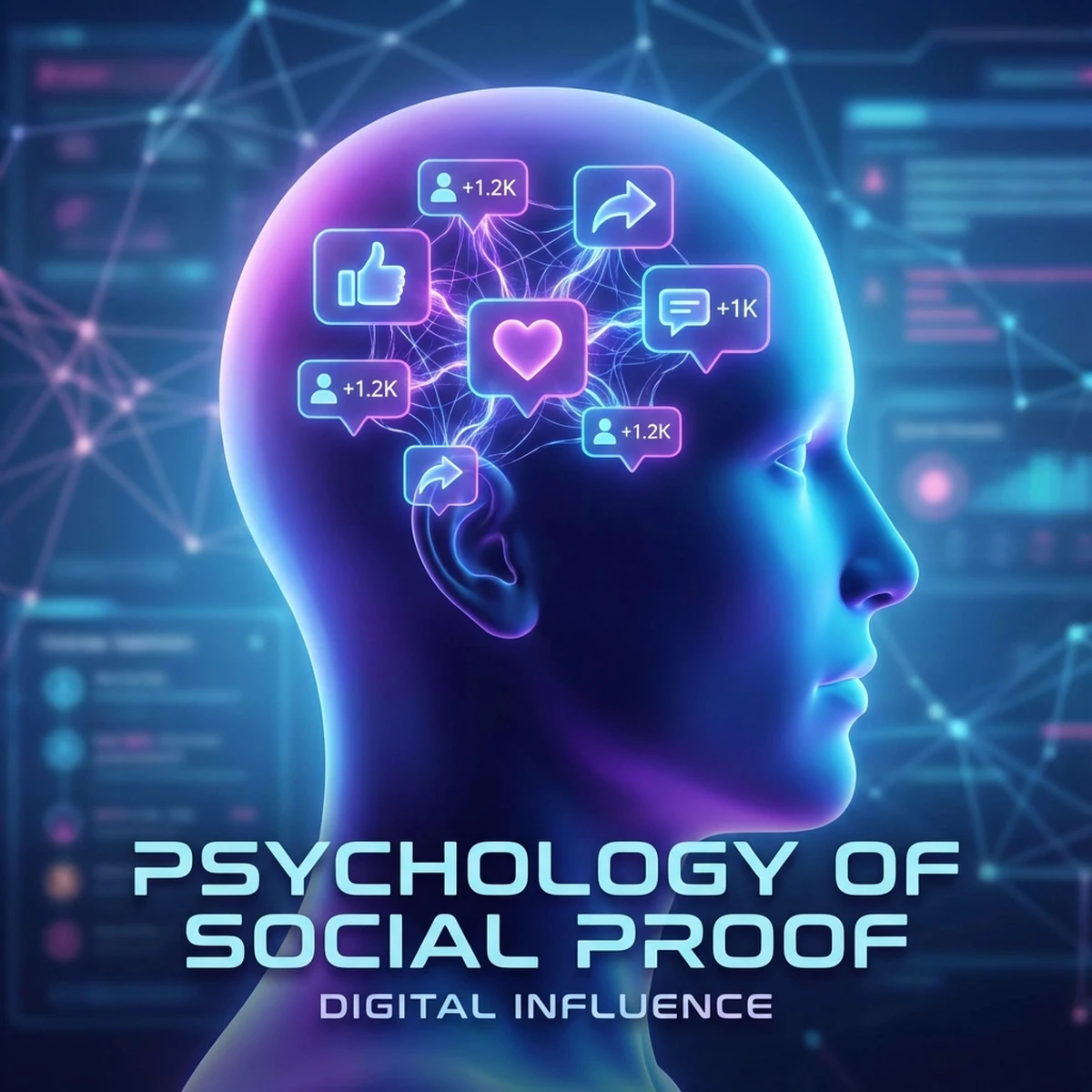
Have you ever wondered why a restaurant with a line stretching down the street keeps pulling in more people, even when they have no idea whether the food is good? Or why a page with hundreds of thousands of likes sells so easily that one photo post gets people reacting? This is not a coincidence and it is not magic. It is neuroscience. Today we are going to dig into the consumer psychology that explains why like campaigns are a strategy that plays straight to your customers' brains and really does drive sales.
1. The "follow the crowd" effect (Bandwagon Effect) 🐑
Humans are social animals with a survival instinct buried in our DNA. We tend to feel safe when we follow the majority. When we scroll our feed and see a post with a lot of likes (say, 10k likes), the subconscious part of the brain immediately reads it as:
"Lots of people like this = this must be good/safe/high quality, otherwise this many people would not like it."
That is why a like campaign service works so well at creating a first impression that makes casual visitors stop and look.
2. Social Proof: the invisible seal of approval ✅
In an online shopping world where we cannot touch the product, smell it, or taste it, "like counts" and "comments" are the only things acting as Trust Signals. They work like a certificate of quality. A high like count can reduce Purchase Anxiety in customers, making them feel that "buying from this shop is low risk" because plenty of other people have bought there too.
3. FOMO (Fear Of Missing Out): afraid of missing the express train 😱
The fear of being left out of the trend is another powerful trigger. When people see a post with likes taking off and lots of shares (viral content), they feel uneasy: "I have to go look, I have to go join in, otherwise I will not know what everyone is talking about."
Using like campaigns to "spark" things in the early stage helps build a sense of hype and draws real people in to take a look, with organic engagement following like dominos.
4. The Halo Effect: a good image carries more than half the battle 😇
The Halo Effect is a psychological bias where we judge the whole of something from a single standout trait. When customers see a page with a lot of likes (the standout trait), they immediately assume "the products must be good," "the service must be excellent," "shipping must be fast" (the whole picture), automatically. That makes closing a sale easier without having to explain every product benefit at length.
Summary: psychology and marketing go hand in hand
From a marketing point of view, like campaigns are not about faking numbers. They are about "managing how people feel and how much they trust you." If you understand this psychology and apply it alongside genuinely good products and presentation, you can win customers over and build a business that lasts.
Frequently asked questions (FAQ) about marketing psychology
Q: Why do people like what everyone else likes?
A: It is a psychological behavior called the "Bandwagon Effect."
Humans feel safer and more confident when they follow what the majority is doing.
Q: Do lots of likes really make people trust a page?
A: Yes. The human brain often uses "shortcuts" (heuristics) to make decisions. When it sees a big number,
it automatically reads it as good, popular, or trustworthy.
Q: What is the Halo Effect?
A: It is the phenomenon where a good image carries more than half the battle. When people see one standout strength (such as
lots of likes), they assume everything else (product quality, service) must be good too.